Social Icons

Showing posts with label Science G5. Show all posts

Friday, May 16, 2025

Science Summary 2nd Semester for Grade 5 (Updated 2025)

A device that converts natural energy into useful work is called an engine. Contact force is the force of attraction between any two objects. Matter is anything that takes up space and has mass and weight. Friction is the force that resists motion between surfaces. Light energy is the energy we can see. Chemical energy is stored in chemical bonds, and kinetic energy is energy of motion. Liquid becomes gas at the boiling point of a substance. The boiling point and condensation point of water is 100°C. Ice is lighter than water because it is less dense.

The chromosphere is the sun's atmosphere. Lunar eclipses happen when the moon passes through Earth's shadow. The troposphere is the layer of the atmosphere that is closest to the Earth. The ozone layer is the layer that protects Earth from ultraviolet rays. 21% of air is oxygen. 93,000,000 mi is the distance of the sun from Earth. In the mesosphere, meteoroids burn up.

Crescent is the first moon phase after a new moon. Mercury is the planet closest to the sun. Venus is known as Earth’s bright twin but is inhospitable. Jupiter is the largest planet and the 5th from the sun. Saturn has seven rings and is three planets away from Earth. Uranus lies on its side and has 27 moons. Neptune is the last planet in the solar system and has fast winds. Mars is a red one shining bright in the night.

A scientist who studies weather is a meteorologist. Rising air, water vapor, and dust are the three ingredients to form clouds. Sea fog is the fog that forms over oceans. Altocumulus cloud is bumpy and white and floats at medium height. Cumulonimbus is the cloud type that produces thunder, rain, and hail.


Thursday, November 21, 2024

Science G5 Semester 1 Summary (Updated)

Science is search for the laws of nature and for ways to use them for the benefit of mankind. A scientist is like a detective, searching for law and order as he or she investigates the creation of God. Senses, intelligence, books, and equipment are four basic tools you have to investigate nature. Tongue is the one sense you should not use.

Queen bee is a female bee that mates and lays eggs. Drone-a male bee; has no stinger and does no work. Only female bees can sting! A bee's stinger is a modified egg-laying structure, or ovipositor Pollen is the yellow "dust" that flowers use in producing seeds. Worker-a female bee that does not mate and lay eggs. Nectar is a sweet liquid made by flowers in order to attract insects. Pollination is the transfer of pollen from male to female plant parts. Honeybees survive in the winter by stay close together in their hive and move their wings to stay warm. Hibernate means to sleep through the winter. The ways you can prevent bee stings are: Stay away from insect nests; do not try to shoo insects away; be careful while you are mowing the lawn, pulling weeds, or cutting vines; do not go barefoot. Beetles is the insect order that is identified by a straight line down its abdomen. True bugs is the insect order identified by a V or X on its abdomen.

Almost every food chain begin with a green plant. Ray flowers are the white flowers that surround the daisy's disk flowers. Shrew is a tiny insectivore that must eat almost 24 hours a day. Polar bear fur appears white but is actually clear, hollow fibbers. The only flying mammal bat. Platypus is an egg-laying mammal with a bill. Panda is a carnivore that eats mostly bamboo

Opaque-does not let light pass through translucent-allows light to pass through, but scatters the light. Transparent-allows light to pass through; clear. The speed of light approximately 186,000 miles per second. Shadow is a a spot of darkness cast by an opaque object. Natural light comes from an object God made; artificial light comes from a man-made object. Thomas Edison invent the electric light bulb. An incandescent bulb works by heating a thin tungsten wire inside a glass bulb with electricity until it glows. Convex mirror is a mirror that bulges toward the viewer (it's scatter light) and concave mirrors focus light. The headlight is luminous, but the reflector is not. Leaves look green because they absorb all other colors in light and reflect green.

Tide is the systematic rise and fall of ocean water every six hours. Neap tide is a tide in which there is less of a difference between high and low tides. Spring tide-a tide which is higher or lower than normal tides. The three intertidal zones are: high-barnacles, middle-seaweed, mussels, whelk. low-kelp, sea urchins, sea anemones. The gravity of the moon and the sun pulling on the earth's waters causes tides. Algae helpful to people as fertilizer, as a source of iodine, in food, and in drug products


Friday, November 24, 2023

Science G5 Summary - Semester 1

Engine is a device that converts energy from a natural source into useful work. What is the force of attraction that exists between any pair of objects called gravitational force

Heat energy resists motion and is also known as friction. When an object moves against a surface with friction, mechanical energy is transformed into heat. Chemical energy is stored in the bonds that hold molecules and chemical compounds together. Boiling point is the temperature at which a substance changes from a liquid into a gas. Combustible is the type of substances in gasoline, oil, coal, and wood. The ice is lighter than liquid water because it's less dense. Contact force occurs when one object pushes against another. We can see and feel the light and heat energy. Kinetic energy is the energy of motion.

Chromosphere is the atmosphere of the sun.

Lunar eclipse happens when the moon travels through the Earth's shadow. The air is composed of 21% oxygen, 78% nitrogen. Troposphere is the layer of the atmosphere is closest to the Earth and where all weather occurs. Ozone layer is the layer in the stratosphere helps protect the Earth from ultraviolet rays. Mesosphere helps protect the Earth from meteoroids. The topmost layer of the atmosphere is Exosphere.

Meteoroids are small solid pieces of rocky debris traveling through space. The average distance from the Earth to the Sun is approximately 93 million miles (150 million kilometers). Meteorologist is the scientist who studies the weather. The greenhouse effect prevents the Earth's heat from escaping easily into space.

Evening fog is not a type of fog. The three ingredients in the cloud recipe are rising air, water vapor, and dust. The mountains cause air to rise upward, often forming clouds. Altocumulus is the type of cloud described as patchy, puffy, and bumpy, found at medium heights in the sky. Fog is a type of cloud that stays near the ground and appears as a low layer cloud. Cumulus is described as a small, light, puffy, and white cloud seen in good weather when the sun shines bright. Cumulonimbus is the type of cloud that brings thunderstorms, heavy rainfall, and hail on hot summer days. Sleet is type of the precipitation formed by the freezing of raindrops.

What makes a chameleon distinct is its ability to change color to match its surroundings. The unique thing about a flounder is that it has two eyes on one side of its head. A mud puppy never leaves the water, which distinguishes it from salamanders. Which Ostrich is the bird that considered the largest in the world. The characteristics of a hummingbird include a specialized beak and tongue, rapid wing beats, a large heart and strong muscles, and small size. The Komodo dragon is distinguished by its size and habitat in Indonesia.

Thursday, February 3, 2022

Living Sea - Definitions

 Section A

1. plankton-tiny plants and animals that float in the upper regions of the ocean

2. molecule-the smallest part of a substance that still has all the qualities of that substance 3. atom-the smallest part of an element (much too small to be seen); made of one or more electrons flying about a nucleus

4. aquifer-an underground place where water collects

5. tide-the systematic rise and fall of ocean water every six hours 6. intertidal zone-one of various regions between the low-tide and high-tide lines where plants and animals are clustered together

7. molluska soft-bodied invertebrate often hav ing a protective shell (exoskeleton)

8. bivalve-a mollusk having two matching shells joined by hinges 9. univalve-a mollusk having a single shell

10. crustacean-an invertebrate with a crust like shell, a segmented body, and jointed legs, such as shrimp, lobsters, and crabs; a kind of shellfish

11. regenerate-to regrow

12. pinniped-an animal with flippers, such as a walrus or seal; a "wing-footed" animal

13. blubber-a thick layer of fat under the skin of most sea mammals that protects them from the  cold and helps them float

14. rookery-a colony, usually of birds

15. oceanographer-a scientist who studies the sea


 Section B

1. has teeth which are fused to form a beak

parrotfish

2. has an outer covering that forms reefs

coral polyp

3. the most poisonous fish in the world

stonefish 

4. a colorful animal that looks like a flower

sea anemone

5. water plants such as seaweed

algae

6. an invertebrate that cements itself to rock

barnacle

7. the largest flying bird 

wandering albatross

8. the largest pinniped

elephant seal

9. a snail that eats mussels

whelk

10. a bivalve that forms pearls

oyster

11. a large pinniped with tusks

walrus

12. a small, one- or two-shelled invertebrate

mollusk

13. the cleaner mimic

blenny

14. the fish that swims upright

sea horse

15. uses tools to crack open sea urchins

sea otter

Saturday, September 16, 2017

Mitos Antariksa


Bila kamu bukan karyawan NASA, mungkin pengetahuan tentang Antariksa kamu dapat dari buku, film, guru atau saudaramu.

Apakah benar matahari kita itu berwarna kuning?
Apa astronot meledak di angkasa?
Apakah separuh dari Bulan selalu gelap?

Apa lagi? Bumi datar?


Tembok Cina

Mungkin kamu pernah membaca, "Tembok besar Cina bisa terlihat dari Bulan." Apa benar begitu? Sebenarnya, tidak ada struktur bangunan yang terlihat dari luar angkasa!

Matahari.
Meski kita sudah diingatkan untuk tidak melihat langsung matahari, tapi kamu pasti pernah melihatnya beberapa detik. Lalu kamu melihatnya sebagai warna kuning. Bahkan di buku juga warnanya kuning. Dan bila kamu meminta adikmu atau anak usia 5 tahun menggambar matahari pasti mereka menggambar dengan warna kuning. Padahal matahari tidak berwarna kuning.

Kita tidak akan menemukan warna kuning jika cakram surya terlihat dari luar angkasa. Jika kita melihat gambar yang diproyeksikan dari matahari di siang hari, warnanya putih seluruhnya, terutama jika diambil di tempat yang tinggi.

 Apakah matahari berapi? Matahari bukanlah bola raksasa yang memiliki api abadi, tapi gas yang dikonversi menjadi sinar gamma, inilah yang membuatnya bercahaya. 

Bulan

Kata orang, bulan pasti sangat kencang karena bisa mengitari bumi dalam satu hari. Benarkah demikian? Faktanya, satelit bumi ini lebih lambat dan membutuhkan waktu 27 hari untuk mengorbit. Inilah yang menyebabkan mengapa bulan setiap hari tampak berbeda.

Bulan memiliki sumbu sendiri saat mengorbit bumi. Kita hanya melihat 59% permukaannya, tapi ini tak berarti kita tak bisa melihatnya dari matahari.

Merkurius

Pasti kamu pikir, Merkurius planet paling panas di sistem tata surya, sebab jaraknya paling dekat dengan matahari. Padahal atmosfer lebih berpengaruh dibandingkan dengan kedekatan dengan matahari. Sebenarnya, Venus adalah planet yang lebih panas dibandingkan merkurius, yang suhunya berkisar -173 derajat Celsius sampai 427 derajat Celsius.

Suara di Angkasa
Dalam film-film futuristik (misalnya Star Trek, Star Wars, Guardian of Galaxy, dll), bila ada benturan di luar angkasa pasti menghasilka suara menggelegar, padahal suara tidak bisa merambat tanpa udara. Tanpa udara, benturan di antariksa tidak bersuara.

Astronot

Apakah astronot meledak di ruang angkasa? Tidak mungkin bisa selamat di antariksa bila tidak menggunakan baju khusus. Dalam hitungan menit, tubuh akan mati lemas dan darah. Tapi Anda tidak akan meledak. Tubuh Anda akan membengkak, tapi kulit manusia cukup kuat untuk menahan ledakan.

Meteorit 

Meteorit beku di luar angkasa, ketika masuk ke atmosfer makan akan mengeluarkan api, mereka jatuh sangat cepat sehingga tidak mungkin sangat panas. Mungkin ketika jatuh hanya hangat. 

Graviasi

Kalau astronot melayang tidak berarti tidak ada gravitasi. Benarkah demikian?  Sebenarnya, gravitasi tetap ada. Inilah yang membuat obyek tetap bergerak di orbit. Astronaut di luar angkasa terlihat melayang kerena mereka secara konstan jatuh.


Kesimpulan
Menjadi seorang scientist, jangan menjadi apa kata orang saja tetapi kita harus menyelidiki, yang mana yang benar dan ilmiah. Mitos hanya ditempatkan di buku dan film fiksi ilmiah saja. bukan fakta yang sebenarnya.

Sumber 1
Sumber 2

Thursday, May 4, 2017

Venomous Snakes in Indonesia

The dangerously venomous snakes in Indonesia are mainly from three families:

1. Elapidae (Cobras, Kraits, sea snakes and coral snakes)  Sea snakes and  Kraits are more venomous than Cobras but much less aggressive ( Krait=Ular malas in Bahasa)

 2.Vipers (ular tanah, ular pohon) cause the most fatalities of all because their habits bring them into contact with humans the most.

    The third family of venomous snakes, the colubrid or back fanged snakes includes garter snakes and vine snakes. These are generally dismissed as non venomous or non dangerous, however, there are at least two common species which have caused fatalities.Also, the toxicity of Colubrid venom is poorly understood by scientists. Below are pictures of examples of these three families of dangerous Indonesian snakes. ALL the examples pictured are common in Indonesia and are ALL dangerous with the possible exception of the Vine snake

1. Cobras
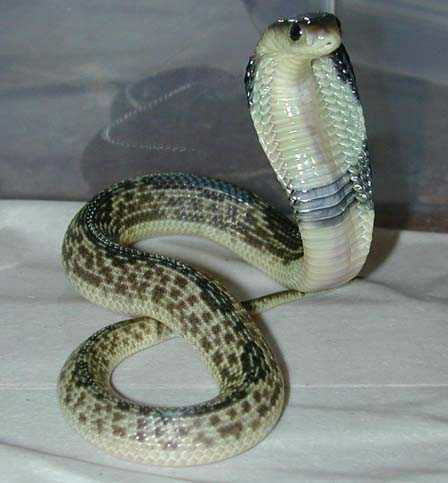
A young Javan spitting cobra
There are three common species of Cobra in Indonesia. Their Colouration varies from plain black, brown or olive green to barred with yellow as seen here. They are large active and fast moving and will usually get out of your way. They only show the neck ‘hood‘when they are cornered.

2. Kraits

Bungarus fasciatus (the largest species of krait)
Kraits are generally shy and nocturnal and although non aggressive, they do have a habit of entering homes at night. They have VERY powerful venom. If they do bite, you only have a 50 % chance of surviving.

3. Vipers
the Green Pit Viper are found around Jakarta
Vipers are found in a range of habitats including the branches of trees and small bushes. They are shy, tend to hide and are difficult to see until dangerously close.

4. Colubrids


This is a large and diverse family including Garter snakes, (top two pictures) rat snakes and vine snakes.  (Bottom picture) Most are believed to be not dangerous.

Other groups
Sea snakes are in the Elapid family. They are a large and diverse family. The most common species most look much like banded kraits and are even commonly referred to as sea Kraits.  They are extremely common in seas and estuaries all over Asia. They are extremely reluctant to bite and have very small fangs but they are all extremely venomous. Best not to take a chance!


Sea snake

Coral snakes

These are related to Cobras and Kraits. Coral snakes are burrowing snakes, similar in appearance to banded Kraits but more brightly coloured. They are generally shy and rarely seen, they are nevertheless very venomous.

Identification
It is clear from these pictures that the dangerous snakes of Indonesia come in all shapes and colours and include some very common species. The problem is that they also vary in appearance within a species. Cobras and Colubrid species can vary a lot in colour depending on age, Habitat and moulting stage. This can cause fatal mistakes.

Effect of Bites
Bites from Cobras and Vipers are very painful and leave you in no doubt that you have a problem, but bites from Kraits, Sea snakes and Colubrid snakes have almost no immediate effect and can cause fatal mistake number two; ‘it doesn’t hurt so it must be a harmless species’ In the case of Kraits  by the time you start to get symptoms there will be nothing a hospital can do. In the case of the most dangerous colubrid species, the serious symptoms often take as long as day to appear. The clinical effects range from paralysis (Kraits and sea snakes) to blood disorders such as excessive clotting or bleeding (vipers and Colubrids) or in some case, a mixture of these. (Some vipers and Cobras).

Treatment
Because of the problems with Identification and lack of symptoms ALL snakebites by wild snakes should be treated as serious. People bitten by pythons may disagree but I know many people who have misidentified pit vipers as baby pythons!

The following recommended course of action has been composed from surveys done in India and Asia including data on survival factors from tens of thousands of cases.

  1. Don’t waste time with fist aid, tourniquets, sucking out the poison and the like. Get help, you will need to get to hospital quickly. You should rest as much as possible so you will need someone to transport you unless the hospital is close.
  2. Go to a modern, well equipped hospital with the following facilities: Intensive care unit with equipment for assisted breathing, heart monitoring and emergency resuscitation. This is to deal with the effects of respiratory and cardiac failure resulting from cobra or krait bites. You will also need facilities to deal with transplants of blood, plasma etc and dialysis. This is in the event of bites by vipers or colubrids which can cause kidney failure.
  1. Get as much information as possible about the snake, Have someone find it,  kill it and bring it with you if possible but failing that, get pictures and try to identify it (you may need help with this!) Hospitals in Indonesia are not usually staffed by snakebite experts and they will need all the help they can get. 
  2. Antivenin (antivenom) should only be used if it is made from the same species and comes from the same country as the snake. Antivenin treatment is risky since there it usually causes a severe allergic reaction and it is only worth the risk if it is done exactly right.

source: http://www.expat.or.id/medical/poisonoussnakes.html

Friday, September 9, 2016

G5 Science homework

Dear G5 students, this is your homework.
Please find luminous, reflector, concave, and convex materials in your home.
http://www.bbc.co.uk/staticarchive/9a2daecd646597696e9c26e8df970182bf0355dc.gif
  1. Find some luminous object that able to produce its own light!
  2. Find any materials that can reflect light (the bouncing back of light)
  3. Lens is a two-sided piece of transparent material with one or both sides curved. Find any concave lens (a lens that is thicker at the edges than in the middle, making things look smaller).
  4. Also find the convex lens (a lens that bulges toward the viewer, making things look smaller).
Submit to me on Thursday, September 15, 2016.

Friday, September 2, 2016

The Light Can Passes Through?


Examples of transparent objects:
The varied applications of the transparency in glass is most obvious in windows. Glass for functional objects such as cars, flashlights and microscopes also takes great advantage of the transparency of glass both for safety and aesthetically purposes. Marketers exploit the transparency of glass with bottles of products, such as juices and perfumes. Household objects such as cellophane and other plastics use transparency for functional purposes to help individuals identify what is inside a bag or wrapped up. Naturally occurring transparent gems such as diamonds have been used not only to create impressive beauty but also for practical, innovative applications in computer technology, thermo imaging and other fields. The transparency of amber, fossilized tree resin, makes it into a valued gem, but just as importantly it has allowed paleontologists to make revolutionary fossil discoveries.

Transparent objects should not be confused with translucent objects, which transmit but diffuse the light that passes through them.

Examples of translucent material:
Translucent materials obscure objects because they allow some light to pass through, but the light that is allowed to pass through hits particles found within the material and scatters it in all directions. Translucent materials should not be confused with opaque materials. The latter does not allow light to pass through at all. Instead, the object or material absorbs the light as heat.

Examples of opaque objects:
When light strikes an opaque object it is either absorbed by the object or it is bounced off or reflected by the object. For example, white objects reflect light, which is why they are cooler to the touch. Dark objects absorb light and transform it into heat. Other objects absorb some wavelengths of light while deflecting others.

So, the light can passes Through? Can not if we use opaque. 

Chapter 3-Let There be Light!


God is the creator of all light. Light can travels faster that anything else scientist can measure. The speed of light: 186,000mps.
   
Natural lights is the luminous objects we see in God's creation. Why do leaves look green?
because green is reflecting the green leave. Light is always travel in a stright line. Light also energy. Energy is the ability to do work. Thomas Edison invented the incandescent light bulb. Sir Isaac Newton discovered that white light is a mixture of colored light.

Opaque allowing no light to pass through. Transparent is clear; allowing light to pass through.   
Translucent allowing light through but diffusing (scattering) it so objects cannot be seen clearly. Luminous is the able to produce its own light. Reflection is the bouncing back of light.

A two-sided piece of transparent material with one or both sides curved called lens. There are concave and convex lens. Concave lens is a lens that is thicker at the edges than in the middle, making things look smaller. Convex lens is a lens that bulges toward the viewer, making things look bigger.

To gather together in one place: focus. The bending of light rays as they enter a new material: refraction. Prism is a transparent object that separates the colors in white light by bending them at different angles. Spectrum is the series of colored bands created when sunlight is separated.

In our eye, we have retina (the lining at the back of the eyeball that is sensitive to light). The middle of our iris, we have pupil (the opening in the iris through which light enters the eye), iris is the colored part of the eye that surrounds the pupil and regulates its size. Cornea is the transparent, outer layer at the front of the eyeball. Tapetum is an extra layer of cells behind the retina of many nocturnal animals.
   

Wednesday, August 24, 2016

Investigating God's World Chapter 2

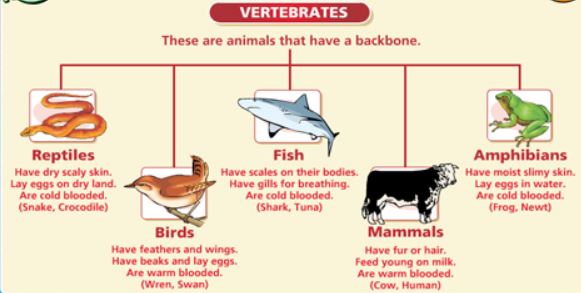
 https://elimufeynman.s3.amazonaws.com/media/resources/vertebrates.JPG


All animals with backbones: vertebrates   
Female mammals are provided with special milk-producing glands called mammary glands
Habitat    is the kind of place in which an animal prefers to live
Mammals that eat plants: herbivores    
Animals whose bodies are designed to maintain a constant body temperature - regardless of the outside temperature: warm - blooded   
The largest group of mammal: rodents   
Squirrel - rodent  
Chimpanzee - primate   

Wombat - marsupial

Fox - canine

Cougar - feline   

Marsupial is a baby mammal that must finish developing in a special pouch outside the mother's body.
Bat is the only mammal that can fly.   

Lions live in family groups called prides   

Cheetah    us the fastest land animal on earth

Giant pandas eat bamboo   

Animals that live together in groups of the same kind: social animals   

Blubber keeps whales and dolphins warm   

Animals that eat other animals that have already died called scavengers   

Antlers    made of solid bone

Echidna is a mammal that lays eggs

Ruminant chews the cud   

Nocturnal active at night   

Skunks and other members of the weasel family produce a strong smelling substance called musk   

Extinct mean an animal no longer exists

Father and mother are the same species purebred   

God's design in nature to be able to respond to change: balance and nature   

Instinct mean inherited behavior pattern   

Moose is largest deer   

Frog padded cushion at the bottom of the horse's foot

Mammal characteristic
  • - Warm-blooded, have hair, 
  • - Hair keeps them warm and helps them hide from enemies   
  • - Have backbones, produce milk,
  • - Give birth to live young, helps them care for their young - they have milk to feed their live young   

Friday, August 12, 2016

Gnawing Mammal


Investigating God's World 2.3

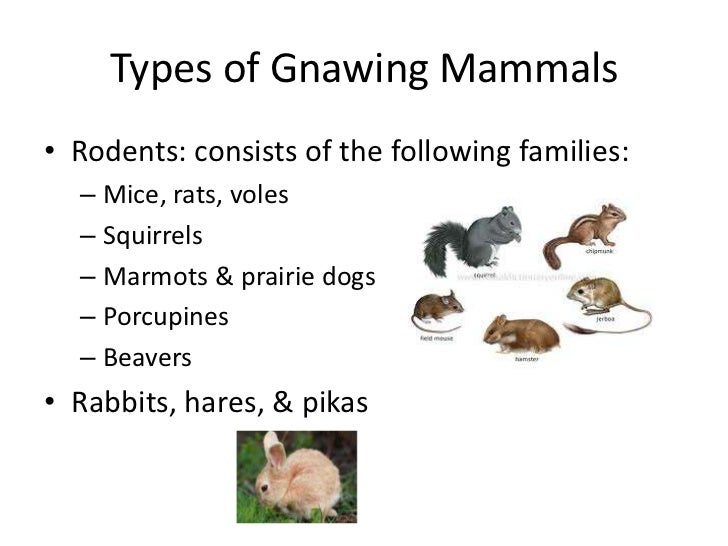
http://image.slidesharecdn.com/gnawingmammals-110227212307-phpapp01/95/gnawing-mammals-3-728.jpg?cb=1298841859

Herbivores : plant eaters including nuts, berries, and leaves


Comestic animals: has been tamed and raised for man's use for many generations


Red squirrels: also called chickaree share some of the rulers of the shared range in spite of their smaller size


Nocturnal: active only at night


Rodents: the largest group of mammals


Mice: smallest rodents


Capybara: largest rodents


Incisors: front teeth used for snipping and biting


Rabbits: often confused with rodents, these animals have extra incisors rodents do not have


Bubonic plague: a devastating disease caused by bacteria on fleas carried by rats throughout Europe


Mouse: a rodent found almost anywhere in the world with a name that means "thief"


Grey squirrel: most familiar rodent that lives in the hollow of a tree


Flying squirrel: has extra flaps of skin between its forelegs and hind legs to help it glide

Thursday, May 12, 2016

Science Summary 2nd Semester for Grade 5


Science 5th grade Investigating God's World

Chapter 6
1.             A device that converts energy from a natural source into useful work called engine.
2.             Contact fore is the force of attraction that exists between any pair of objects.
3.             Matter is anything that takes up space & has mass & weight, and the amount of matter is mass.
4.             Contact force is a force that occurs when one object pushes against another object.
5.             Force that resists motion also called friction.
6.             Electric force causes electrically charged objects either to attract or to repel each other.
7.             Magnetic forces like pole repel, opposite poles attract.
8.             Light energy we can see, and heat energy we can feel.
9.             Chemical energy is the stored in the bonds that hold molecules & chemical compounds together.
10.         Electrical energy found in such things as lightning bolts & the power lines that bring electricity to your home.
11.         Kinetic energy also called energy of motion, and potential energy is stored energy.
12.         Matter everything that takes up space & has mass & weight. Solid has a definite shape. Liquid & gases have no permanent shape.
13.         Melting point the temp. at which a substance changes from a solid into a liquid.
14.         Freezing point the temp. at which a substance changes from a liquid into a solid.
15.         Boiling point is a substance changes from a liquid into a gas. The boiling point of water and the condensation point of water 1000C.
16.         Condensation point is a substance changes from a gas into a liquid.
17.         Gasoline, oil, coal, & wood are very combustible substances fuels.
18.         The reason that ice is lighter than liquid water is because its more dense.
Chapter 7
19.         The atmosphere of the sun called cromosphere.
20.         When the moon travels through the earth's shadow called lunar eclipse. When the moon is on the same level as the sun called solar eclipse.
21.         What percent of the air is oxygen and what precent of nitrogen? 21% of air and 78% of the air is nitrogen.
22.         Layer of atmosphere closest to the earth, and thr layer of the atmosphere where all weather occurs : troposphere.
23.         Layer in the stratosphere which helps protect the earth from ultraviolet rays called ozone layer.
24.         Mesosphere helps protect the earth from being bombarded with meteoroids
25.         Exosphere is the topmost layer of the atmosphere.
26.         A small solid piece of rocky debris traveling through space called meteoroids.
27.         How far away is the sun? 93,000,000 mi. away
28.         Which layer of the Earth's atmosphere is the only place where weather occurs? trophosphere
29.         What do we call the first phase after a new moon? cresent
30.         Where do meteroids burn up? mesosphere
31.         Which planet was the first one discovered in modern times? uranus
32.         Which Planet: Although in size I'm number one, I'm still 5th world from the sun. jupiter
33.         Which Planet: I am Earth's bright twin, some people say; but on me you would not want to stay. venus
34.         Which Planet: With seven rings around my girth, I'm three planets away from Earth. saturn
35.         Which Planet: Winds blow about me strong and fast; in line I am the very last. neptune
36.         Which Planet: As twenty-seven moons aroung me fly, upon my side I always lie. uranus
37.         Which Planet: Life on me would be no fun, for I'm the closest to the sun. mercury
38.         Which Planet: I'm the red one shining bright; no life on me, at day or night. Mars’
Chapter 8
39.         A scientist who studies the weather called meterologist
40.         Greenhouse effect is the blanketing function around the earths atmosphere. The atmosphere's greenhouse effect prevents the earth's heat from escaping easily into space.
41.         Fog is a thin layered cloud near the earths surface. What are three kinds of fog? sea fog,early morning fog, and steam fog
42.         What are the three ingredients in the cloud recipe? rising air,water vapor,dust
43.         What three things cause air to rise upward, often forming clouds? mountains,warm air,fronts
44.         Name three kinds of ice precipitation (not counting snow): freezing rain,sleet,and hail
45.         I'm pathcy and puffy, all bumpy and white; I soar in the sky at a medium height: altocumulus
46.         Name the cloud: While other clouds in the sky are found, I'm the one who stays near the ground. fog
47.         Name the cloud: I'm a low layer cloud, that is true, yet bumpy and rolling I fly in your view. stratocumulus
48.         Name the cloud: I'm small and light, and puffy and white. I'm seen in good weather when the sun shines bright. cumulus
49.         Name the cloud: On hot summer days I thunder and shout, pouring raindrops and hail until I wear out. cumulonimbus
Chapter 9
50.         Flounder is a fish with two eyes on one side of its head.
51.         Mud Puppy one of the world's largest salamanders that never leaves the water.
52.         Chamelion is a lizard that changes color to match its surroundings
53.         ostrich is the largest bird in all the world
54.         hummingbird is a grounded bird with short, rounded wings
55.         Komodo dragon is the most feared reptile and the largest species of lizard found in the Indonesian islands of Komodo, Rinca, Flores, Gili Motang, and Padar.
56.         humming bird is the bird that can fly backwards
57.         glass snake the legless lizard
58.         the difference between cold-blooded and warm-blooded animals are: Cold-blooded animals are those whose body temperatures are regulated by their environment, and Warm-blooded animal can maintain a body temperature.
59.         What is so unique about most bird's bones? there hollow
60.         Why does a snake flick its tongue? so it can hear


Blogger Templates