Social Icons

Showing posts with label Science G3. Show all posts

Friday, November 20, 2020

Science Summary for Grade 3

Chapter 1 – Wonderfully Made

1.       God wants you to enjoy the world. He creates our nervous system to helps you to think, see, hear, feels, smells, and taste.

2.       Your brain controls your whole body.

3.       Your nerves carry messages from your brain to your body and back again.

4.      The left side of your brain controls the right side of the body.

5.       The parts of your body that God designed especially to help you react to the things around you are called your sense organs.

6.       The most important senses are sight, hearing, smell, taste, and touch.

7.       The  Iris is the part of your eye that is colored brown, blue, green, or gray.

8.       The middle of the iris is a black circle. We call this black circle the pupil of your eye.

9.       Thousands of eyes fitted closely together to make an insect’s eye called compound eyes.

10.   Vitamin A is good for your eyes.

11.   The auditory nerve carries the sound message to the brain.

12.   Taste and smell are two senses that work closely together.

13.   Molecules are the tiny particles of a substance

14.   We call the tiny holes in the skin is pores.


Chapter 2 – Exploring the Plant World

15.   The green material in plants is chlorophyll. With the help of sunlight and chlorophyll, the leaf will make a simple sugar called glucose.

17.   Mushrooms grow from spores.

18.   The plant’s job:

Seed to grow new plants. Flower makes seeds. Steems take minerals and water from the soil. Stem carry foods. Leave make food

19.   The plant makes its own food. This process is called photosynthesis.

20.   The three main parts of seeds are seed coat, young plant, and food for the young plant. The seed coat is the hard outer covering of a seed. What happens to the seed coat when the seed begins to sprout? The seed coat pops open, falls off, and dies.

21.   To grow into a plant, the seeds need water, soil, and the right temperature.

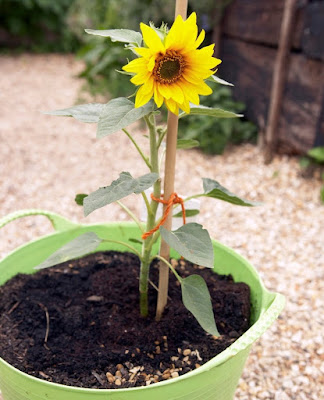
Sunflower


Chapter 3 – Exploring the World of Vertebrate

22.   Animals with backbones are called vertebrates, and animals without backbones are called invertebrates.

23.   Briefly list the five ways that all mammals are alike:

They make milk for their babies and take care of their young.

They have hair/fur and has 4 limbs

They are warm-blooded.

Most give birth to live young.

Mammals breathe with lungs.

24.   Fish are alike in three ways: All fish have gills, all fish have fins and all fish are coldblooded. Fish breathe air with gills.

25.  Salmon are very interesting fish. They hatch in freshwater streams, swim downstream to the sea. Then one day, after they have grown, they swim back to the place where they hatched. There are many streams, how did the salmon know to find the right one? That is one of the wonders of God's creation.

26.   The amphibian means living a double life.

27.   How are reptiles alike: all reptiles breathe with lungs, covered with dry scales and coldblooded.

28.   Bird are the only animals that have feathers


Chapter 4 – Exploring the World of invertebrate

29.   An earthworm has special projections that help protect it from hungry birds. the projections called setae.

30.   The biggest group of invertebrates called insects. Examples of two helpful insects are the Praying mantis & Honey bee.

31.   Many insects go through four stages of growth during their lives: egg, larva, pupa, and adult. This is called metamorphosis.

32.   Spiders are not insects. Spiders have only two parts: a head and thorax.

33.   A caterpillar eating a lot of after it hatches.  A new butterfly’s wings must be dry before it can fly. An insect has 6 jointed legs.

34.   Energy moving through space from its source to an object, then from that object to our eyes called light. Energy ia ability to do work: Sound vibration traveling through the air are called sound waves.

Thursday, November 8, 2018

Science G3 Semester 1 – V2.0 Summary

Chapter 1 – Wonderfully Made
People are the most special part of God's creation. God give you your nervous system to help you enjoy His world. We have three main parts of the nervous system:  the brain, the nerves, the spinal cord. Your brain controls your whole body. Nerves will carry message to and from the brain. The spinal cord is a bundle of millions of nerve cells. The left side of the brain controls the right side of your body.  Our sense organ is the parts of your body are designed especially to help us to react the things around us.


The forehead and cheekbones protect our eyes. Tears help our eyes. They keep the eyes moist and wash dirt and dust for them. Vitamin A is good for your eyes. Though air, water and solid sound can travel. To move rapidly back and forth called vibrate. The eardrum is the thin skin that separates the outer ear from the middle ear. The auditory nerve carries the sound message to the brain. Cochlea is the part in the ear, filled with a liquid. Taste and smell are two senses work closely together. Tiny particles of a substance we call it molecules. Pain warns us of the dangers to the body, that is why it is important that we feel pain.

Chapter 2 – Exploring the Plant World
Upon plants do all living things depend. The seed coat is the hard outer covering of a seed. Pollen is the name of the yellow powder formed in flowers. Pollination is the process moves pollen from flower to flower. Glucose is the simple sugar is made in the process of photosynthesis. Chlorophyll, sunlight, water, and carbon dioxide. Plants need chlorophyll, sunlight, water, and carbon dioxide to complete the process of photosynthesis. Chlorophyll is the e green material in plants. Leaves give off water and oxygen. A single cell produced in some plants instead of flowers and seeds called spore. Spores can be found in spore cases. Moss is made of many tiny plants.

Chapter 3 – Exploring the World of Vertebrate
Vertebrates and invertebrates are the two groups are animals classified.  Amphibian mean: living a double life. Animal without backbone called invertebrates. 

Chapter 4 – Exploring the World of invertebrate
An earthworm has special projections which help protect it from hungry birds. The projection called setae. The arms of an octopus called tentacles. Starfish walk on their special feet called tube feet. The biggest group of invertebrates called insects. A baby spider called spiderling. Camouflage is to cause to look like the surroundings for protection.

Chapter 5 – Exploring the Desert
Once or twice a year it usually rain in the desert.

Monday, November 14, 2016

Science G3 Semester I - Summary 2016

Chapter 1 – Wonderfully Made
1.    God wants  you to enjoy the world. He create our nervous system to helps you to think, see, hear, feel, smell, and taste.
2.    Your  brain control your whole body.
3.    Your  nerves carry  messages from your brain yo your body and back again.
4.    Left side of your brain controls the right side of the body?
5.    The parts of your body that God designed especially to help you react to the things around you are called your sense organs.
6.    The most important senses are those of sight, hearing, smell, taste, and touch.
7.    The Iris is the part of your eye that is colored brown, blue, green, or gray.
8.    The middle of the iris is a black circle. We call this black circle the pupil of your eye.
9.    Compound eyes is thousands of eyes fitted closely together to make insect’s eye.
10.    Vitamin A is good for your eyes.
11.    Sound vibration traveling through the air are called sound waves
12.    Auditory nerve caries the sound message to the brain.
13.    Taste and smell are two senses work closely together.
14.    Molecules is the tiny particles of substance.
15.    We call the tiny holes in the skin is pores.
16.    Several ways in which we can protect your eyes: Eyelids (to close), eyelashes (to protect from dust), tear (wash dust and dirt).
17.    Forehead and cheekbones protect our eyes.
18.    Sound can also be carried through something that solid. Several ways in which sound can travel are: air, water and solid.


Chapter 2 – Exploring the Plant World
19.    Chlorophyll is the green material in plants.
20.    With the help of the sunlight and chlorophyll, the leaf will make a simple sugar called glucose.
21.    Mushrooms grow from spores.
22.    The plant makes its own food. This process is called photosynthesis.
23.    Every part of the plant has a job:
          a.    Seed to grow a new plants
          b.    Flower make seeds
          c.    Take minerals and water from soil
          d.    Stem carry foods
          e.    Leave make food
24.    When the tree was dead or an animal that dies, a special mushroom decay them. The mushrooms use the decaying material for food and turn its minerals to the soil to help new plants grow.

Chapter 3 – Exploring the World of Vertebrate
25.    Animals with backbones are called vertebrates.
26.    Animal without backbones are called invertebrates.
27.    Fish breathe air with gills. Fish are alike in there ways: All fish have gills, all fish have fins and all fish are coldblooded.
28.    Salmon is very interesting fish. They hatch in freshwater streams, swim downstream to he sea. Then one day, after they have grown, they swim back to the place where they hatched. There are many streams, how did the salmon know to find the right one? That is one of the wonders of God creation
29.    The amphibian mean living in a double life.
30.    All reptiles breathe with lungs, covered with dry scales and coldblooded.
31.    Bird are the only animals that have feathers.
32.    Five ways that all mammals are alike:
          1. Feed their young with milk
          2. Have some hair (fur)
          3. Warm-blooded
          4. Have four limbs,
          5. Breath with lungs.

Chapter 4 – Exploring the World of invertebrate
33.    An earthworm has special projections which help protect it from hungry birds. What are the projections called setae.
34.    The biggest group of invertebrates called insects.
35.    Many insects go through four stages of growth during their lives: egg, larva, pupa, and adult. This is called complete metamorphosis.
36.    Example of tte helpful insects are: butterfly, ladybug, hone bee, praying mantis, etc.
37.    Spiders are not insects. Spiders have only two parts: a head and thorax.
38.    The baby spider called spiderling.

Tuesday, May 3, 2016

Science Summary 2nd Semester for Grade 3


Community is a group of plants and animals that depend on each other to live. Community in the pond called fresh water community. Plants grow easily around the pond because there is many minerals to nourish plant growth
The frog tadpole considered an adult frog when there is no tail left at all. Oxygen dissolved in the water that fish need to breathe. Plants needs carbon dioxide. The fish and the plants of the pond help each other. Fish give off carbon dioxide that the plants need and the plants give of oxygen that the fish need. The tadpole able to get oxygen it needs to live, they breathes through gills.
The salamander tadpole also called larva. When a salamander do if it loses its tail or leg, it grow one back. Animals can do a camouflage, they blends into it surroundings. Animals also can spend the winter in sleep. They hibernate.

Food chain is a group of plants and animals that depend  on each other for food.
A forest is a community of around and depends on trees. The tiniest plants of the forest do not grow from seeds. What do they grow from? They grow from spores (fungi and bacteria) .
Trunk is the stem of the tree. Roots takes in water and minerals from the soil and holds the tree in the ground. We can tell the age of trees from the annual rings in heartwood.
The second layer of soil. It is lighter in color, and has fewer minerals, and is deeper than topsoil called subsoil.
To rot, break down, or decompose also called decay.  Soil rich in mineral resources called fertile.  Farmer use something added to the soil to replace mineral resources called fertilizer. The wearing away of soil or rock by wind and water called erosion. The condition of the air called weather.
The atmosphere mean layer of the air that surrounds the earth. Three main elements or ingredients that make the weather: heat, water, and wind.  To send out rays of heat called radiate.Wind is moving air. The falling of rain, snow, hail, or sleet also called precipitation. Electricity that jumps from one cloud to another or from a cloud to the earth called lightning. The sound that lightning makes called  thunder.  Surface film holds a water strider on top of the water.
Solid, liquid, or gas are three forms of  water found in the air. Warm air is lighter  than cold air, it rises. As the warm, moist air rises, it begins to cool. Cooling of warm, moist air causes clouds to form. This is called condensation.
If you are ever caught outside during a thunderstorms, what would you do? Where is the safest places?  To be in a thunderstorm are in a car or in the building that has a steel frame and a lightning rod.

Invertebrates :  An animals with no backbones
Vertebrates   :  An animals with backbones
Cold blooded :  The body temperature stays the same as the temperature around them


Topsoil is the top layer of soil. It is dark-colored, rich in minerals, and not very deep. Subsoil is the second layer of soil. It is lighter in color, and has fewer minerals, and is deeper than topsoil.

Fertile soil is soil in which plants grow well. Fertilizer
something added to the soil to replace mineral resources.
Erosion is the wearing away of soil or rock by wind and water. Soil erosion is the loss of soil by water and wind. Gullies is the small ditches that form where the soil is washed away.

Eeather is the condition of the air. Atmosphere
is layer of the air that surrounds the earth. Heat, water, and wind
three main elements or ingredients that make the weather. Absorb mean to soaks up, and radiate is to send out rays of heat. Water can always be found in the air. Wind is moving air.

Solid, liquid, or gas are the three forms of water found in the air. As the warm, moist air rises, it begins to cool. Cooling of warm, moist air causes clouds to form. This is called condensation.

Precipitation is the falling of rain, snow, hail, or sleet. Beads of ice that began as rain falls through freezing air called sleet.

Lightning is the electricity that jumps from one cloud to another or from a cloud to the earth. Thunder is the sound that lightning makes.

Hurricane is a windstorm that builds up over the warm ocean, and tornado is a windstorm that builds up over hot land. A tornado is often called a twister. Three types of the storms are: thunderstorms, hurricanes, and tornados.

The atmosphere protects the earth from the suns burning rays by providing a blanket of protective air during the day. The earth and the air are always exchanging water with each other. This process called the water cycle.

Friday, April 29, 2016

Special Homeworks


Dear students, this is a special homework only for Grade 2 up to 5:
  1. Please do your homework for additional point in your Science progress report.
  2. Prepare the simple materials. You don't have to buy the new one if you have the old.
  3. While you are doing your experiments, Take a picture or video each step and the result..
  4. Make a science experiment report.
  5. Submit your homework at the latest on May 21, 2016!


Grade 2 - Air Pressure Experiment
  1. Does Air Have Weight?
    To begin these air pressure experiments wave your hand back and forth in the air. It's easy to move your hand around because air pressure is pressing onto your hands in all directions. Air actually weighs 14.7 pounds per square inch at sea level. That means that every square inch of your body is being pressed on by 14.7 pounds of pressure.
  2. Materials
    Balloons
    String
    Scotch tape
    Ruler(stick or clothes hanger may also be used
    Needle or sharp pin 
  3. How to do:
    Cut three strings approximately 12 inches long.
    Blow up two balloons so they are the same size. Tie a string to each balloon.
    Tie one of the balloons to each end of the ruler tight enough so the string will not slip.
    Tie a string loosely around the center part of the ruler so that you can slip the knot back and forth until the balloons are balanced.
    Tape the string in place so it will not move when the balloon is deflated. Prick one of the balloons with a needle or sharp pin.
    Watch how the ruler moves upward on the side where the balloon was deflated. If this does not happen it might be because the center string was not tight enough and moved when the balloon was deflated.
    Try the experiment several more times to see if the experiment works consistently. This is the way real scientists do their work. They test their hypothesis several times to make sure the same thing happens consistently.
  4. Extending the experiment
    Try these air pressure experiments. Balance two deflated balloons on a ruler or stick. Take one balloon off the stick and inflate it. Return the balloon to see what happens. Try balancing several balloons on a yard stick. When you have the yardstick in balance. Predict what you think will happen if you deflate all the balloons, one at a time, from left to right. After writing down your prediction, try this air pressure experiment.

Grade 3 - Salt Crystals Project
  1. Can you grow Your own salt crystals?
    Have fun growing your own salt crystals with this simple project. You can do further research with a microscope in KiCS  LAB once you’re finished. Crystals are beautiful to look at and you might even want to start your own collection.
  2. What you'll need:
        A jar
        Water
        About half a cup of salt
        A spoon for stirring
        String
        Scissors
        2 toothpicks
  3. How to do:
        Fill the jar with water.Add about half a cup of salt to the water.
        Mix the solution together with a spoon.
        Cut a piece of string with scissors and tie each end to a toothpick.
        Place the string over the top of the jar so that the string dangles into the middle of the solution and the toothpicks hang over the edge.
        Don’t forget to clean up when you’ve finished.
  4. Observation:
    Crystals can be found grouped together as lots of small crystals or as huge individual crystals. When you look at your crystals, you can examine the differences between them: Are they perfectly formed? What shape are they? What color? Can you see any microorganisms on the crystals?
  5. How it Happens? Write in your science experiment report!

Grade 4 - Ice Cube Experiment
  1. The Lifting Ice Cube experiment demonstrates the melting and freezing properties of water, which results to another property of matter called adherence. Adherence refers to close physical attachment or union of two objects. To further understand this phenomenon, let us do your science experiment!
    The Lifting Ice Cube experiment demonstrates the melting and freezing properties of water, which results to another property of matter called adherence. Adherence refers to close physical attachment or union of two objects. To further understand this phenomenon, let us do your science experiment!
  2. In this experiment, you will need the following materials:
        Glass of water
        Ice cubes
        String
        Salt
  3. How to do
    Drop an ice cube in the glass of water. Take the string and dangle the end of it on the ice cube, and then keep it still.
    While the string is dangled down onto the ice cube, sprinkle a bit of salt on the ice cube.  Set aside for a few minutes. After some time, try to lift the string and observe what happens to the ice cube.
  4. How it Happens? Write in your science experiment report! ..
Grade 5 - Make a teabag fly
You'll never look at teabags in the same way again
  1. Construct a rocket from a tea bag? Well you can and it’s easy!
    But be warned - it isn’t quite as spectacular as a NASA shuttle launch.
    Remember - always ask an adult for help with matches and don't do this experiment near any flammable materials.
  2. Materials:
        Tea bag (must be stapled at the top)
        Matches or lighter
        Non-flammable plate or ceramic plate
        Water or fire extinguisher (just in case!)
  3. How to do:
        Remove the staple, label and string from the teabag.
        Pour the tea into a bin.
        Unfold the teabag.
        Turn the teabag into a cylinder - make sure there's a space in the centre. You can use your finger if that helps.
        Stand the cylinder on one end on a plate. Make sure it's on a flat surface.
        Use a lighter or match to set the top of the teabag cylinder on fire.
  4. What will happen and how it happens? Write in your science experiment report
   Remember! 
  1. Take a picture or video each step and the result.
  2. Make a science experiment report.
  3. Submit your homework at the latest on 11 May 2016!

Thursday, November 12, 2015

Kisi-Kisi Semester 1 (G3-G6)

Kisi-Kisi Science G3


Exploring God's world Wonderfully made, page 2-27
Exploring the plant world, page 28-45
Exploring the world of vertebrates, page 46-65
Exploring the world of invertebrates, page 66-83
Exploring the dessert, page 84-89

Kisi-Kisi Science G4

Understanding Science, page 2-14
Understanding Insets, page15-45
Understanding Plants, page 46-75
Understanding Birds, page 76-101
Understanding matter, page 102-130

Kisi-Kisi G5

Science
Investigating nature, page 2-31
The amazing mammals, page 32-73
Let there be the light, page 74-94
Treasures of the earth, page 95-123
IPA

Organ Pernapasan Manusia dan Hewan, hal 2-16
Organ Pencernaan Manusia, hal 22 -  34
Makanan dan Kesehatan, hal  40 - 53
Peredaran Darah, hal 58 - 70
Tumbuhan hijau, hal 76 - 88
Penyesuaian Makhluk Hidup dengan Lingkungannya, hal 92 - 104
Sifat Benda, hal 110 - 121

Kisi-Kisi G6

Science
Plentiful Plant, page 1-22
Observing Invertebrates, page 23 - 45
Forces of the Earth, page 46 - 67
IPA
Ciri-ciri Khusus Makhluk Hidup, hal 2 - 12
Pertumbuhan dan Perkembangan Makhluk Hidup, hal 38 - 62
Keseimbangan Ekosistem, hal 66 - 77
Hewan dan Tumbuhan Langka, hal 84 – 96
Konduktor dan Isolator Panas, hal 102 – 112
Perubahan Benda, hal 118 - 135   

Wednesday, September 30, 2015

Something to Remember - World of Vertebrates

http://claretscience5.wikispaces.com/file/view/Vertebrates%20-%20Group.jpg/527831280/505x363/Vertebrates%20-%20Group.jpg

Mammals   
1. make milk
2. hair
3. limbs (two or four)
4. warm-blooded
5. breathe with lungs
6. born alive   

Fish   
1. breathe with gills
2. fins
3. cold-blooded
4. scales
5. hatch from eggs
   
Amphibians   
1. breath with gills when young
2. breath with lungs when older
3. all amphibians have smooth, moist skin
4. amphibians lay eggs
5. cold-blooded
6. have no hair
7. begin life in water
examples: frogs, toads, and salamanders   

Reptiles   
1. breath with lungs
2. dry, scaly skin (but not turtles)
3. cold-blooded
4. most lay eggs
5. begin life on land
examples: snakes, lizards, turtles, crocodiles, and alligators   

Birds   
1. have feathers
2. have wings
3. hatch from eggs
4. have two legs
5. have a beak or bill
6. hollow bones
7. breathe with lungs
   
Cold-blooded   
body temperature changes when the temperature of the environment changes   

Vertebrate   
animals with backbones

Invertebrates    animals without backbones   

Warm-blooded   
body temperature stays just about the same no matter the outside temperature   

Skeleton   

the bones which form the framework of a body   

Wednesday, August 26, 2015

Exploring Home Work - Growing a Plant from the Seeds

Grade 3 student have a fun homework. Your already gave to you the red bean seed and a corn seed. You have to plant it in your back yard or in a small vase. Wait until it grow. Take a picture with camera or with your cellphone. Save it and send to mr. Wesly.
Dead line to send your homework until on September 2, 2015.

The point of this exploring:
  1. the students can explore and get experience for them self about growing a plant from the seed. 
  2. the students can get extra point for science.

Monday, August 24, 2015

Exploring Plant World - Many Parts Many Jobs

 http://www.thebibleverseoftheday.org/wp-content/uploads/2013/06/seeds.jpg
All living things depend on plants. Without plans, the only thing you could eat would be water! Each parts of the plant has a specific job. One part holds the plant up while another makes food. Let's look at the parts of the plant:

Seeds
https://upload.wikimedia.org/wikipedia/commons/thumb/0/03/Ginkgo_embryo_and_gametophyte.jpg/330px-Ginkgo_embryo_and_gametophyte.jpghttp://easyscienceforkids.com/wp-content/uploads/2013/04/parts_of_seed.gif
The inside of a Ginkgo seed, showing a well-developed embryo, nutritive tissue, and a bit of the surrounding seed coat

Each seed has a seed coat, or covering. This protects the young plant inside the seed from drying out of from being easily crushed. Most seeds come from flowers, but some come from cones. Pine trees have cones but not flowers.

Flowers
http://i1.wp.com/www.flowerswallpaper.biz/wp-content/uploads/2014/12/different-types-of-flowers1.jpg?resize=411%2C411
The flower's job is to make seed. The petals of some plants are brightly colored to attract bees and other insects to the flower.
 http://earthobservatory.nasa.gov/Features/Bees/Images/bee_pollen_macro.jpg
As the bee take nectar from the flower to make honey, it also picks up a yellow dust called pollen on its legs. The bee visit another flower ans some of the pollen dust from the last flower drops off in to the flower. We call this pollination.

Pollination is the act of moving pollen from one part of a flower to another, or from one flower to another, so that the flower can make seeds.

Stems
http://image.slidesharecdn.com/evsplantclassi-130909025626-/95/environmental-science-evs-plants-and-trees-class-i-6-638.jpg?cb=1406982201
The stem contain tiny tubes though which water and food travel from the roots to the leaves and flowers as they need them. Some plant have tall stems, some have short stems, ad the other have soft stem. Some stem are rough, such as the woody stems of trees, vines, and shrubs.
 

Leaves
https://upload.wikimedia.org/wikipedia/commons/0/04/Leaves-scan.jpg
The leaves are attached the the stem. A leaf's job is to make food for the plant. Chlorophyll is the green material in plants.
http://www.cneccc.edu.hk/subjects/bio/album/Chapter8/images/PHOTOSYNTHESIS0.jpg
On sunny day, the green plant take water from the plant + take carbon dioxide from the air + chlorophyll, the leaf will make a simple sugar called glucose. Using glucose ans minerals, the plant will make other sugar, starches, fats, ans cellulose. This process called photosynthesis.

Roots
http://s.hswstatic.com/gif/willow/root-info0.gif

Roots holds the plant in the ground. They also take minerals and water from the soil and send them through the stem to all parts of the plant.


Science G3. First Semester
Fourth week on August 2015

Wednesday, August 12, 2015

Summary for Exploring God's World - Chapter 1 - Wonderfully Made


Wonderfully Made
·         nervous system : the system of nerves which includes the brain, the nerves, and the spinal cord

·         nerves : the fibers that carry messages to and from the brain

·         spinal cord : a bundle of nerves found in the backbone

·         sense organs : the parts of the body that are designed to help you react to things around you

·         iris : the colored part of the eye that controls the size of the pupil

·         pupil  : the black hole in the center of the eye that becomes smaller or larger to control the amount of light that enters the eye

·         optic nerve : the nerve which carries the message of sight to the brain

·         vibrate : to move rapidly back and forth

·         sound waves : sound vibrations traveling through the air

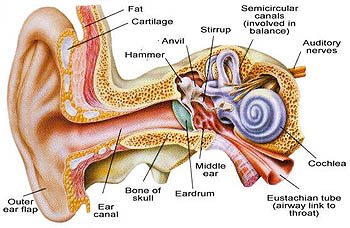
·         cochlea : the part in the inner ear which is filled with liquid that stimulates the auditory nerve

·         auditory nerve : the nerve which carries the message of hearing to the brain

·         molecules : the tiny particles of a substance

·         taste buds : the little bumps on the tongue which contain nerves for the sense of taste

·         pores : the tiny holes in the skin

·         perspiration : the liquid waste that is given off through the pores of the skin

·         scab : the protective crust that forms over a wound when your skin has been cut

·         What are the 3 main parts of the ear? outer ear, middle ear and inner ear

·         What are the 2 main parts of the eye? pupil and iris

·        The spinal cord is the bundle of nerves found in the backbone.

·        The eardrum is a thin sheet of skin that separates the outer ear from the middle ear.

·        taste and smell are 2 senses that work together

·        Foods with vitamin A are good for your eyes.

·        The auditory nerve is the nerve that sends the message of what you have heard to the brain.

·        The optic nerve  is the nerve that carries the message of what you have seen to the brain.

·        Vibration means to move rapidly back and forth.

·         Taste buds are the little bumps on the tongue .

·         Sound vibrations traveling through the air are called sound waves.

·         The parts of the body that help you react to the world around you are called the sense organs

·         Tiny particles of a substance are called molecules

·        Nerves carry messages to and from the brain

·        Sound can travel through air, water, and solids.

Science G3, First Semester
Fisrt Week on August 2015

Wednesday, August 5, 2015

Something to Remember

http://t2.gstatic.com/images?q=tbn:ANd9GcRBEKDXzHpebHh-iU-VP8lf450LUXCZWw8PQRVYScNoXopFUTPs
  1. Parts of the eye:
    1. Lens - focuses picturesIris - controls the amount of light entering the eye
    2. Pupil - the opening which lets the light into the eye
    3. Retina - area where the image of the picture is made
    4. Optic nerve - carries messages of pictures to the brain
  2. Some foods that are rich in vitamin A: carrots, liver, cheese, peas, eggs, and peaches.
  3. When you read and write, you should make sure that the light is coming from above and behind you.
  4. The forehead and cheekbones protect our eye.
  5. Tears help our eye to keep the eyes moist and wash dirt and dust.
  6. Part of the Ear:
http://kytinnitustreatment.com/wp-content/uploads/2015/05/ear-diagram-labels.jpg
Science G3, 1st Semester.
First week on August 2015.
 

Wednesday, July 29, 2015

Your sense organs - Eye

The most important senses are:


Our sense organs is the part of our body are designed especially to help us to react the things around us.

EYE
When your eyes open, they are constantly "taking pictures." When there is plenty of light, your eyes take pictures in bright color. When there is very little light, your eyes seem take pictures in black and white.

Like a camera, lens is use for focuses picture. Retina is the area where the image of the picture is made. The iris is the part of your eye that is colored (brown, blue, green, or gray). The iris has muscles that control the amount of light that enter your eye. The middle is a black circle called pupil. The pupil is a small. round hole in the center of the iris. You can watch it became larger to let more lights in, and smaller to let less light in.  At the back of your eye is the optic nerve. This nerve carries the message of waht you have just seen to your brain.

Your Nervous System


Your nervous system helps you to think, see, hear, feel, and taste.
Three main parts of nervous system:
  1. The brain (controls your whole body{the right brain controls the left side of the body, left side to the right body}),
  2. The nerves (carry message to and from the brain),
  3. Spinal cord (a large group of nerves in your back bone).
2nd week 2015.
1st semester G3

 
Blogger Templates